March 15, 2026

For decades, the 'Golden Age of Television' was defined by cinema runs, sprawling seasons, and the centre of our living room TVs. But as we move through 2026, the screen in your pocket has officially staged an uprising.
Vertical dramas, once dismissed as a niche TikTok trend, have exploded into a $14 billion global powerhouse. If you've found yourself accidentally finishing a 60 episode series about a secret billionaire while waiting for the bus, you aren't alone.
Here is everything you need to know about the seismic shift in the microdrama landscape.
The most shocking update of 2026 isn't just that people are watching short form content; it's that they are choosing it over traditional streaming.
Recent data reveals an 'Engagement Gap' that has sent shockwaves through Los Angeles. While Netflix users average about 25 minutes of daily mobile engagement, users on platforms like ReelShort are clocking in at over 35 minutes. We have officially reached a point where 'snackable' content is becoming the main course.
The biggest tech story of the year is the marriage of microdramas and Generative AI, with AI production has moved from 'uncanny valley' to 'viral sensation.'
Take the series Feng Shui Tian Shi, for example. It amassed 100 million views in just 12 hours using entirely AI generated characters and environments. For producers, the maths is irresistible: an AI driven series costs roughly $15,000 to produce, compared to the $150,000+ required for live action.
Even more impressive is 'Visual Swapping.' AI tools now allow a studio to film a drama once and instantly swap the cast's ethnicity, language, and cultural references to suit different markets. A hit in Seoul can become a hit in Paris overnight with the click of a button.
If you can't beat them, join them. After years of watching from the sidelines, major studios are diving into the vertical deep end.
Fox Entertainment has pivoted aggressively, partnering with creators like Dhar Mann to flood the market with high production value vertical series.
Disney and Netflix are both reportedly testing 'Vertical First' tabs within their apps. They are no longer just competing with each other; they are competing with the 'scroll.'
Until recently, microdramas were synonymous with soapy 'Alpha Male' romances and revenge plots aimed primarily at female audiences. In 2026, the genres are diversifying to capture the rest of the market.
The way we pay for content is changing. While Netflix relies on the monthly subscription, microdramas thrive on the 'Pay per Episode' and 'Ad Supported' (AVOD) models.
Interestingly, users in 2026 are proving far more willing to watch a 30 second ad to unlock a 1 minute cliffhanger than they are to sit through a commercial break in a traditional film. This 'micro monetization' is fueling the industry's massive $14 billion valuation.
We are witnessing a fundamental shift in human attention. The microdrama isn't just 'short TV', it is a new medium entirely, built for a generation that views the world through a 9:16 lens.
Whether it's AI generated stars or Hollywood backed vertical thrillers, one thing is clear: the most important screen in the world isn't the one on your wall. It's the one in the palm of your hand.
If you'd like to know more about the growing industry contact us!
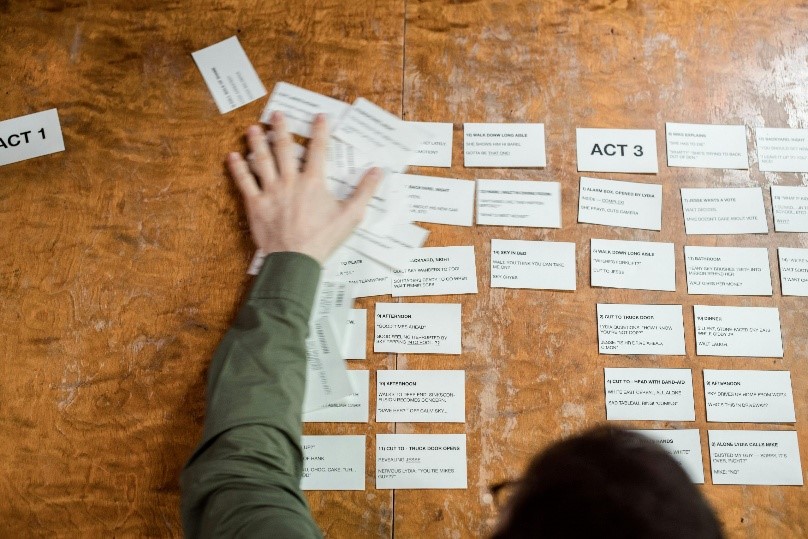
If you think writing a microdrama is the same as writing a movie or TV episode, it’s time to level up your game.
January 22, 2025
Not long ago, “appointment television” was the norm. Families gathered on the sofa to catch their favorite programme, from shows...
February 22, 2025

The rise of mobile-first viewing has transformed storytelling, and AI is now pushing the boundaries of vertical dramas.
March 22, 2025