July 14, 2026
The global vertical drama boom is entering a new phase. The first wave was dominated by Chinese platforms proving that ultra short serialised storytelling could generate enormous mobile engagement.
The second wave is about localisation.
As apps like ReelShort, DramaBox, FlexTV, and GoodShort aggressively expand into North America and Europe, the challenge is no longer simply producing more content. It is producing adaptable content that feels native to Western audiences while maintaining the addictive pacing and retention mechanics that made Chinese microdramas successful in the first place.
This is where production strategy becomes critical, and increasingly, studios with international infrastructure, multilingual production pipelines, and accent flexible casting systems are gaining a major competitive advantage. The future of vertical drama may belong not just to creators who understand retention engineering, but to studios capable of localising emotional storytelling across cultures at scale.
Chinese microdramas pioneered many of the storytelling mechanics now dominating vertical entertainment: rapid cliffhangers, emotional compression, billionaire romance structures, revenge driven pacing, fast cut editing, hyper addictive episodic design.
But direct translation into English speaking markets often fails. Why? Because American audiences process dialogue rhythm, romantic dynamics, humour, social status and emotional expression very differently.
A storyline that feels emotionally satisfying in China may feel melodramatic, unnatural, or culturally distant to U.S. viewers if localisation is handled poorly. The challenge is not simply language translation, it is emotional translation.
This means adapting:
Without losing the high retention pacing structure that makes vertical dramas commercially successful. That balancing act is now becoming one of the most valuable production capabilities in the industry.
Traditional media localisation relied heavily on subtitles, dubbing, and basic script adaptation. Vertical drama demands something far deeper.
Because the genre relies so heavily on facial intimacy, emotional immediacy, viewer immersion and parasocial attachment, audiences instantly detect when performances feel artificial or culturally mismatched.
In microdrama, authenticity directly affects retention. Even small inconsistencies in accents and dialogue rhythm can reduce Episode 1 completion rates.
This is especially important in U.S. markets where audiences expect:
Localisation therefore becomes a production layer challenge rather than simply a post production task. The entire pipeline must adapt.
Among all localisation elements, casting may be the most economically important. Microdrama platforms rely on emotional binge behaviour, fast attachment formation, character obsession, and romantic fantasy immersion. That means audiences must instantly believe the emotional world.
Poor casting breaks the illusion immediately. Many Chinese origin vertical dramas struggle in Western markets because actors may:
This creates friction and friction kills retention. The best localisation strategies therefore prioritise accent ready performers, international acting pools, native level English fluency, westernised emotional pacing and cross cultural performance adaptability. This is where globally positioned production companies gain leverage.
Sea Star Productions stands out in the vertical drama ecosystem from our geographic positioning. Operating between London and Istanbul gives us unusual casting and production flexibility for international microdrama localisation. This structure creates several advantages simultaneously.
London remains one of the world's strongest hubs for:
This matters enormously for U.S. focused vertical dramas. Platforms increasingly want actors who can perform in neutral American accents, adapt to British or international markets, deliver emotionally natural English dialogue, and maintain mobile screen intimacy. Casting flexibility reduces localisation friction, and increases exportability across English speaking regions.
Istanbul offers a different strategic advantage:
For vertical drama economics, this is critical. Microdrama production depends on fast turnaround cycles, high content throughput, and scalable shooting systems. Studios need to produce rapidly while preserving cinematic quality.
Istanbul enables European aesthetics, flexible urban settings, luxury location simulation, and efficient production scaling without the cost structures associated with Los Angeles or London only production. This creates a highly efficient hybrid model.
As vertical drama globalises, accent compatibility is quietly becoming one of the industry's most undervalued assets. Why? Because microdramas rely heavily on close up dialogue scenes, romantic tension, emotional immediacy and mobile headphone listening. Viewers hear every inconsistency, and a weak accent instantly damages character credibility, emotional immersion, romantic fantasy and viewer trust.
Studios that can cast actors comfortable with:
...gain major distribution flexibility. Our international positioning is designed precisely for this environment. Instead of relying on heavily dubbed or awkwardly localised performances, we can build productions with globally compatible casting from the beginning.
Successful U.S. localisation is not only about language. Visual grammar matters too. Chinese microdramas often use:
American audiences generally prefer:
The challenge is preserving addictive pacing without creating cultural artificiality. This is where international production teams become valuable. Studios operating across multiple markets are better positioned to understand which tropes transfer successfully, which emotional rhythms require adjustment, and which visual signals feel culturally authentic.
The vertical drama market is rapidly evolving from domestic Chinese production toward internationalised content ecosystems. The next generation of winning studios will likely combine:
This is why hybrid production companies are attracting growing industry attention. Studios like us represent a broader industry trend: the merging of mobile native storytelling, international talent systems, retention focused production design and localisation first development. Vertical drama is becoming increasingly global in both audience and execution.
Localisation is not merely creative, it directly affects platform economics. Better localisation improves Episode 1 completion rates, user retention, viewer immersion, subscription conversion and international ARPU.
In a market where platforms spend aggressively on paid acquisition, even small retention improvements can dramatically increase profitability. This means studios capable of producing culturally adaptive vertical dramas become strategically valuable.
The future winners in microdrama may not simply be the fastest producers or the cheapest studios, they may be the companies best able to localise emotional engagement across markets.
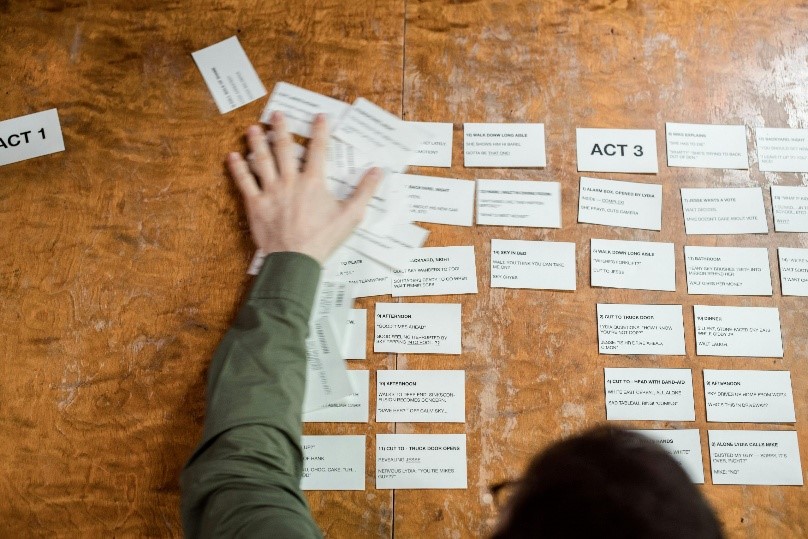
If you think writing a microdrama is the same as writing a movie or TV episode, it’s time to level up your game.
January 22, 2025

Not long ago, “appointment television” was the norm. Families gathered on the sofa to catch their favorite programme, from shows...
February 22, 2025

The rise of mobile-first viewing has transformed storytelling, and AI is now pushing the boundaries of vertical dramas.
March 22, 2025