June 5, 2026

The vertical drama industry has discovered something Hollywood ignored for decades. The secret to gaining attention is no longer won over two hours, it is won in the first 30 seconds.
Platforms like ReelShort, DramaBox, FlexTV, and GoodShort operate in one of the most brutally competitive environments in entertainment. Users install apps impulsively from TikTok ads, judge content instantly, and abandon series without hesitation. In this market, Episode 1 is not storytelling, it is engineering. The first episode determines whether the user continues watching, whether the algorithm distributes the show, and ultimately if paid acquisition remains profitable.
Completion rate has become one of the most important economic metrics in vertical drama platforms (https://seastarfilm.com/). A series with weak Episode 1 retention dies quickly regardless of production quality.
Traditional entertainment rewarded reach, vertical drama platforms reward retention. A TikTok ad may generate millions of impressions, but if users abandon Episode 1 halfway through, the economics collapse.
For most platforms, Episode 1 functions like a conversion funnel. The platform is asking: "Can this show emotionally trap the viewer before they leave?"
This changes the entire philosophy of storytelling. Writers no longer optimise for:
They are optimising for:
Vertical drama is closer to behavioural product design than conventional television writing.
The most dangerous moment in vertical drama is the opening five seconds. If the user does not feel emotional urgency immediately, they swipe away.
Top performing Episode 1 openings typically begin with:
This is intentional, platforms discovered that emotional instability creates immediate attention anchoring.
Weak openings usually fail because they:
Strong openings do the opposite. They create:
The audience should instantly ask: "What just happened?" Curiosity is the retention trigger.
Traditional screenwriting values buildup but vertical drama punishes buildup. Episode 1 of a vertical compresses character archetypes, relationship dynamics, conflict introduction and high stakes escalation into less than two minutes.
A successful vertical drama writer can establish:
...within 60 to 90 seconds.
This compression creates momentum. The viewer does not have time to disengage because the narrative continuously delivers new emotional information.
Vertical drama platforms are effectively cliffhanger engines. The strongest Episode 1 scripts maintain "micro cliffhangers" every 15 to 25 seconds. These include: interrupted confessions, sudden entrances, revealed secrets, romantic reversals, financial shocks and unexpected recognition moments.
These create a rhythm of unresolved tension and make the viewer's brain continuously expect payoff. Psychologically, this mirrors the reward loop mechanics used in social media. The audience keeps watching because the brain anticipates emotional resolution, but the platform strategically delays full payoff.
This is retention engineering at the narrative level.
In traditional drama, nuanced characters are valuable. In vertical drama, speed matters more than complexity. That is why top performing Episode 1 scripts rely heavily on instantly recognisable archetypes like the billionaire CEO or underestimated heroine.
These archetypes reduce cognitive load, users immediately understand the power dynamics and emotional roles of the world, this accelerates engagement.
Complex characterisation can come later, after retention is secured. The first episode prioritises clarity over depth.
Romance remains the highest performing genre in vertical drama because it naturally supports emotional anticipation, repeated tension cycles, delayed gratification through enemies to lovers tropes and parasocial attachments.
A romance plot can generate dozens of micro conflicts without exhausting narrative momentum.
This structure is extremely retention efficient. It creates endless opportunities for cliffhangers, emotional reversals and viewer speculation.
In platform economics terms, romance has one of the best "engagement per minute" ratios in entertainment.
Most successful vertical dramas now keep Episode 1 extremely short: usually 60 to 120 seconds.
This is not a creative preference. It is a retention optimisation strategy.
Short episodes:
Platforms discovered that viewers are more willing to continue after completing something than abandoning midway, completion itself becomes psychologically rewarding as the user feels progress and that progress loop is critical for binge retention.
The best performing vertical dramas optimise more than scripts. They utilise everything from thumbnail design to paywall placement. In the edit, platforms opt for fast cut editing and the content generally performs better because it reduces idle visual time, maintains stimulation and prevents attention drift.
Music cues are similarly engineered to amplify suspense, romantic anticipation and emotional shock.
Modern vertical drama is essentially "algorithmic storytelling optimised for mobile attention spans."
Why do platforms obsess over completion rate? Because retention directly determines profitability.
If Episode 1 completion rises from 45% to 70%, the economics of paid acquisition improve dramatically.
Higher completion rates often lead to:
This is why platforms invest heavily in:
In many companies, creative decisions are now partially informed by performance metrics rather than artistic instinct alone. The entertainment industry as a whole is becoming increasingly behavioural engineering driven.
The next generation of vertical drama platforms will likely become even more algorithmic. Expect:
Future platforms may identify:
The result could be a new era of entertainment built around:
Vertical drama may eventually resemble TikTok, gaming, and streaming combined into a single system.
Episode 1 is no longer simply the beginning of a story, it is the most economically important asset in vertical entertainment. Every second is engineered to prevent swipes, trigger curiosity and sustain emotional tension.
The best vertical dramas are not succeeding accidentally, they are designed with retention mathematics in mind. In this industry, storytelling is increasingly becoming a science of attention and the platforms that master Episode 1 retention will dominate the next generation of mobile entertainment.
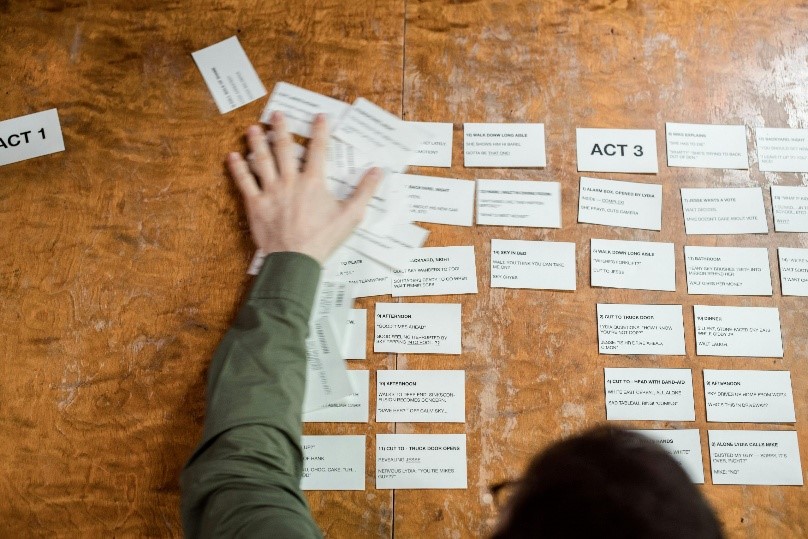
If you think writing a microdrama is the same as writing a movie or TV episode, it’s time to level up your game.
January 22, 2025
Not long ago, “appointment television” was the norm. Families gathered on the sofa to catch their favorite programme, from shows...
February 22, 2025

The rise of mobile-first viewing has transformed storytelling, and AI is now pushing the boundaries of vertical dramas.
March 22, 2025